
Dr. Earl J. Campazzi, Jr. brings over 35 years of clinical experience and four board certifications to his Palm Beach concierge practice, bridging traditional medicine with modern technology. A graduate of the University of Pittsburgh School of Medicine, he also holds three degrees from Johns Hopkins University—including a Master of Public Health from the School of Hygiene and Public Health—and an MBA from Duke University.
Dr. Campazzi's distinguished career includes serving as Senior Associate Consultant at the Mayo Clinic, Chief Resident in Preventive Medicine at Johns Hopkins, and Medical Director for Palm Beach County's Occupational Health Clinic. As founder of Island Medical Care, he has practiced concierge medicine in Palm Beach since 2006, earning national recognition such as HCA's Top Physician for Patient Satisfaction award, while maintaining staff privileges at leading hospitals including Cleveland Clinic Florida.
Passionate about making artificial intelligence accessible to everyone—even those who aren't “tech people”—Dr. Campazzi helps families use simple, practical tools to live longer, healthier lives. Outside of medicine, he enjoys life in Palm Beach with his wife, Julie, and their three Chinese Crested Powder Puff dogs—Buster, Fred, and Lilly.
Explore the Book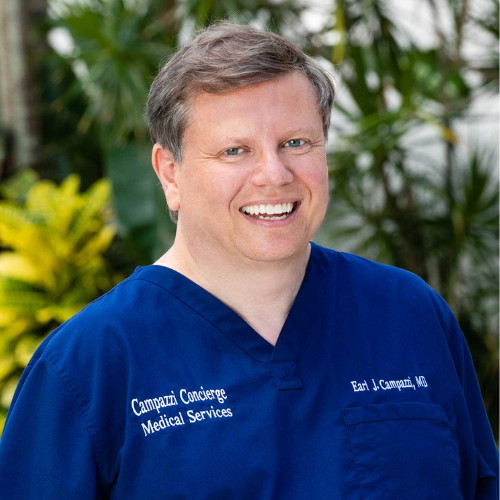
When a wearable device revealed patterns in his sleep and recovery that traditional medicine had overlooked, Earl saw firsthand how simple tools could unlock powerful insights. Inspired by those discoveries—and by patients whose smartwatches caught life-threatening conditions—he began teaching others how to use technology they already own to protect their health.
Despite admitting he's “no tech expert” himself, he has made it his mission to prove that anyone can benefit from AI health tools. At home in West Palm Beach, he shares life with his wife Julie and their three Chinese Crested Powder Puff dogs, enjoying golf, walks on the beach, and a philosophy that health should make life richer, not more complicated.
Dr. Campazzi has dedicated his career to rethinking how healthcare can truly serve patients, especially in a time when most feel rushed or unheard. His work spans clinical practice, research, and education, with a consistent focus on prevention and empowering people before illness takes hold. He has advised on occupational health programs, led medical operations committees, and guided countless patients through complex healthcare challenges with clarity and compassion.
His current efforts explore how everyday technologies—like wearables, apps, and smartphones—can be translated into meaningful health improvements for ordinary people, bridging the gap between traditional healthcare and practical, technology-driven solutions.
 Earl Campazzi